

Navigating global trade turbulence: India’s moment of opportunity
From policy uncertainty to pragmatic trade diplomacy
Navigating global trade turbulence: India’s moment of opportunity
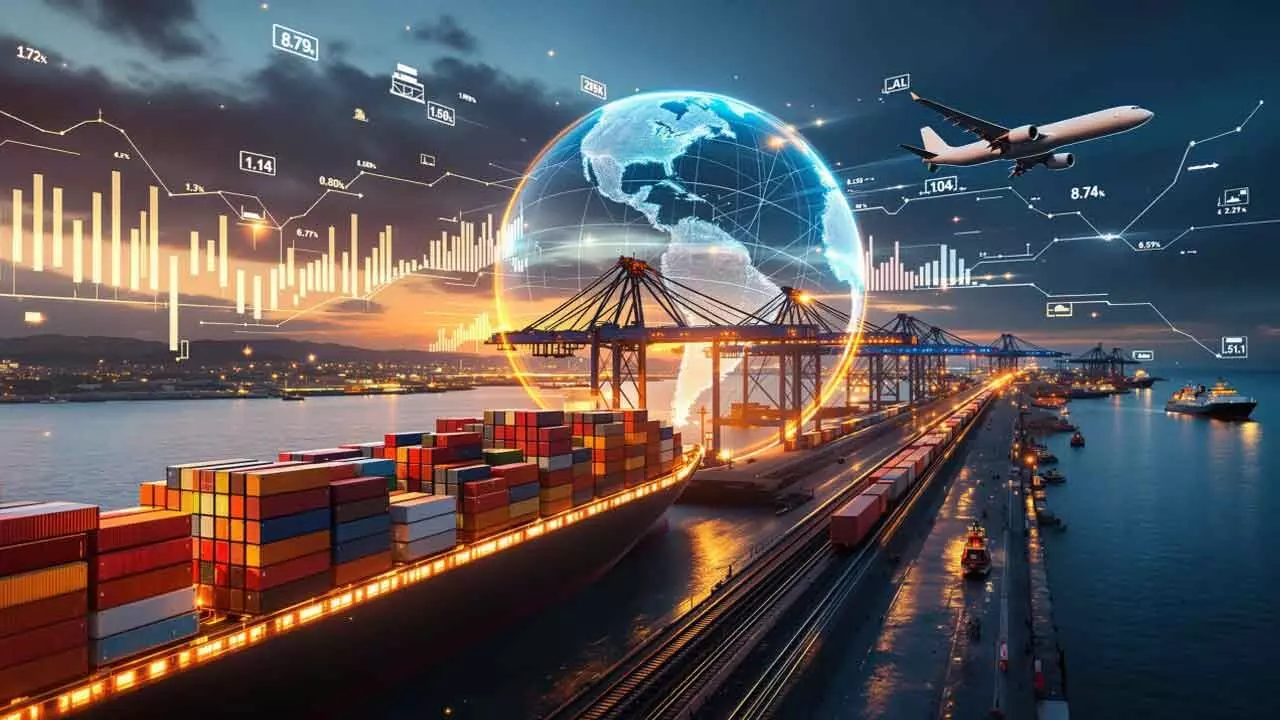

For every country, international trade is crucial for maintaining a sound external liabilities position. No country can meet all its requirements domestically, even though self-sufficiency remains an ideal objective.
Globalisation emerged from this reality: countries with surplus production beyond domestic needs began exporting to those with deficits, earning foreign exchange that, in turn, enabled them to import goods and services they lacked. This mutual dependence through exports and imports forms the backbone of global trade and commerce.
In recent years, however, many countries have shifted focus towards local markets, domestic investments, and inward-looking trade policies. Policy uncertainties, higher tariffs, and the increased use of tariff and non-tariff barriers have disrupted established trade flows. These trends, combined with geopolitical tensions and sanctions imposed on certain countries, have led to significant supply-chain disturbances and heightened uncertainty in global trade.
The COVID-19 pandemic further exposed the risks of excessive dependence on limited sources for essential goods, key raw materials, food items, and pharmaceutical products. Lockdowns and supply disruptions highlighted the need for greater self-reliance and localised supply chains, especially during emergencies.
While complete self-sufficiency is neither feasible nor desirable, the experience reinforced the importance of resilient supply chains and a balanced approach between domestic capability and external dependence. Sound international trade, built on mutual cooperation, trust, and fair policies, remains essential for global prosperity.
Reflecting these challenges, global trade volumes are under pressure. According to the UNCTAD Trade and Development Report 2025, global trade growth is projected to slow to 2.6 per cent, below pre-pandemic levels.
Similarly, the World Trade Organization expects global trade volume growth to ease to around 0.5 per cent in 2026, down from about 2.4 per cent in 2025. These projections underline the difficult terrain through which global trade is currently passing.
Trade uncertainties today are largely driven by policy volatility. Higher tariffs raise the cost of imports, which either gets passed on to consumers, adding to inflationary pressures, or absorbed by importers, squeezing manufacturing margins. A recent study by KPMG notes that about 72 per cent of global trade professionals rank US tariff volatility as the most impactful regulatory change.
Tighter compliance requirements, especially related to product classification and rules of origin, have further increased the cost and complexity of trade. In response, countries are increasingly negotiating bilateral and regional agreements to secure favourable terms, gradually reshaping global trade flows.
Supply-chain resilience and realignment have therefore become strategic priorities. According to KPMG, resilience in 2026 is increasingly about near-shoring and multi-country sourcing. Diversification of supply sources and export destinations, along with new trade agreements across regions, is being pursued to counter uncertainties and reduce concentration risk.
Companies are spreading production and supplier bases across geographies and using multiple logistics routes be it ocean, air, and land to mitigate disruptions. However, these measures often increase logistics costs and lead to delays, especially when diversion routes are required due to geopolitical risks, climate events, or security threats.
Proactive risk mapping and management are thus emerging as critical tools to identify vulnerabilities and respond before operations are impacted.
Amid this challenging global environment, India’s proactive trade strategy deserves appreciation. India has entered into several significant trade agreements, including with the UK, the European Union, and the EFTA bloc comprising Switzerland, Norway, Iceland, and Liechtenstein.
The India-EFTA TEPA is notable for covering 92.2 per cent of tariff lines and for a unique commitment of US$100 billion in FDI into India over 15 years. The India-Oman CEPA secures 100 per cent duty-free access in Oman across 98.08 per cent of tariff lines.
The India-UK CETA provides duty-free access to 99 per cent of India’s exports to the UK and includes provisions on services and professional mobility.
The India-New Zealand FTA was concluded in a record nine months, offering significant duty-free access for Indian goods. Meanwhile, the earlier India-UAE CEPA has been a game-changer, helping bilateral trade cross US$100 billion.
The much-awaited India-US trade engagement has also gained momentum. India and the US have agreed on a framework for an interim trade agreement, paving the way for a broader bilateral trade agreement in the future. A key immediate gain is the US decision to reduce reciprocal tariffs on Indian goods to 18 per cent from earlier levels as high as 50 per cent, which had adversely affected Indian exporters.
This reduction is expected to boost exports of textiles, apparel, leather, footwear, plastics, chemicals, home décor, and artisanal goods. There is also optimism that, once the interim agreement is signed, tariffs could be further reduced or eliminated on major Indian exports such as generic pharmaceuticals, gems and jewellery, and aircraft parts.
Trade agreements are inherently reciprocal and require trust, transparency, and a spirit of give and take. During negotiations, sensitive issues such as agriculture, dairy, MSME protection, and energy sourcing, particularly India’s right to procure oil based on cost considerations, had to be carefully balanced.
India has diversified its oil imports and may increase sourcing from the US and Venezuela, but it must retain flexibility given its heavy dependence on imported energy. The interim agreement reflects these realities and should be viewed as a positive step towards a comprehensive trade partnership between the two countries.
India has shown notable resilience amid rising global trade fragmentation and protectionism. The Economic Survey 2025-26 highlights a “Goldilocks” moment for the external sector, supported by strong export performance, manageable deficits, and robust foreign exchange reserves.
Total exports of goods and services reached a record US$825.3 billion in FY25 and continue to show momentum despite global uncertainties in 2026. Services exports, which grew 13.6 per cent to US$387.6 billion in FY25, have acted as a crucial stabiliser by offsetting the merchandise trade deficit.
Efforts to diversify export markets have also yielded results, with exports to non-US markets rising by 5.5 per cent between May and November 2025.
With multiple trade agreements and the interim arrangement with the US, India is well-positioned not only to protect but also to expand its share in global trade. A balanced approach, boosting manufacturing exports, planning imports prudently based on cost considerations, avoiding unnecessary imports, encouraging local production, and widening supply sources, will be critical.
A long-term policy perspective and sustained efforts are essential for India to secure a higher and more stable share of international trade in an increasingly uncertain global environment.
(The author is former Chairman & Managing Director of Indian Overseas Bank)





